|
|
BackgroundIn 1996 the Government of Nepal established the Alternative Energy Promotion Centre (AEPC). APEC works to promote and develop solar energy, micro-hydro, biogas, improved water mills, bio-fuel & improved cook stoves and is the pioneer of Nepal’s alternative / renewable energy sector.
The availability of alternative and renewable energy is directly linked to the living conditions of rural populations which has inspired support for this sector from abroad.
Denmark was the first country to support Nepal in its endeavour to alleviate poverty through the development of alternative, renewable energy in rural areas. It signed an agreement with Nepal for the implementation of the Energy Sector Assistance Programme (ESAP Phase 1) on 26th March 1999.
OverviewThe objective of Phase I was to improve the living conditions of rural populations in Nepal by increasing access to effective and appropriate energy technologies. Despite the fact that Nepal was going through an armed insurgency during the first phase of the programme, it made remarkable progress towards achieving this.
The original DANIDA fund made available for ESAP Phase 1 was 154 million DKK. During the course of implementation, it became clear that additional funding was needed. This was provided by DANIDA, Norway and the Government of Nepal.
Phase 1 Achievements- National Subsidy Policy established
- Rural Energy Fund set up
- An established and active body of stakeholders
- Effective dissemination of renewable energy technologies to the rural poor
- Improved lifestyles in communities using alternative energy products
- Quality products developed and produded
- Networks set up for NGO, CBO and private sector players
- New jobs created in rural / renewable energy
- AEPC staff training programs completed
- Solar Energy Test Station (SETS) established in rural areas
- Renewable Energy Test Stations set up
- Bank financing for renewable energy projects secured
- Nepal Interim Photovoltaic Quality Assurance (NIPQA) implemented effectively
- AEPC logistics & communication systems overhauled and upgraded
|
|
| Donor | Currency | Original Budget (in millions) | Additional Budget (in millions) | Total Expenditure(in millions) | | Danida | DKK | 154 | 37.3 | 191.3 | | Norway | NoK | 0 | 35.5 | 35.5 | | Nepal | Rs. | 0 | 99.6 | 99.6 | |
Phases of Implementation | Phase | Dates | | Programme Phase 1 | March 1999 - March 2004 | | Programme Phase I no cost extension | April 2004 - September 2004 | | Programme Bridging Phase | October 2004 - June 2005 | | Programme Bridging Phase no cost extension 1 | July 2005 - June 2006 | | Programme Bridging Phase no cost extension 2 | July 2006 - March 2007 | |
|
Support to AEPC Component - Achievements |
- The design and implementation of a national subsidy policy for renewable energy.
- Interim Rural Energy Fund ((I)REF) established to manage the ESAP subsidy fund.
- ((I)REF) developed into a full-fledged  REF with contributions from Nepal, DANIDA, Norway & KfW of Germany.
- Subsidy policy revised in 2006 and mechanism developed for periodic review.
- Preplanning for  Strategic Development / Organisational Development Plan for AEPC.
- AEPC secured support from Norway, The World Bank, UNDP, The Netherlands, KfW & The European Commission.
- Awareness and capacity building activities of stakeholder organisations successfully carried out.
- Improved / restructured Human Resource, Logistics & Communication System at AEPC.
|
|
Improved Cooking Stove (ICS) Component - Achievements |
- 150 local district based organisations (NGOs, CBOs and GOs), seven national level NGOs and the UN World Food Programme were involved in ESAP’s improved cook stoves programme.  
- 213,000 ICSs dissemninated to households in 33 mid-hill districts directly benefitting  a million rural people.
- 2,500 ICS promoter/builder jobs created
- Visible development in the Biomass sector:
- Sustainable ICS dissemination strategy developed
- Local  capacity enhanced
- Institutional growth in the sector
- Technical Review Process now standard within AEPC
- Institutionalised training curriculum for capacity building
|
|
Micro-Hydro Component – Achievements |
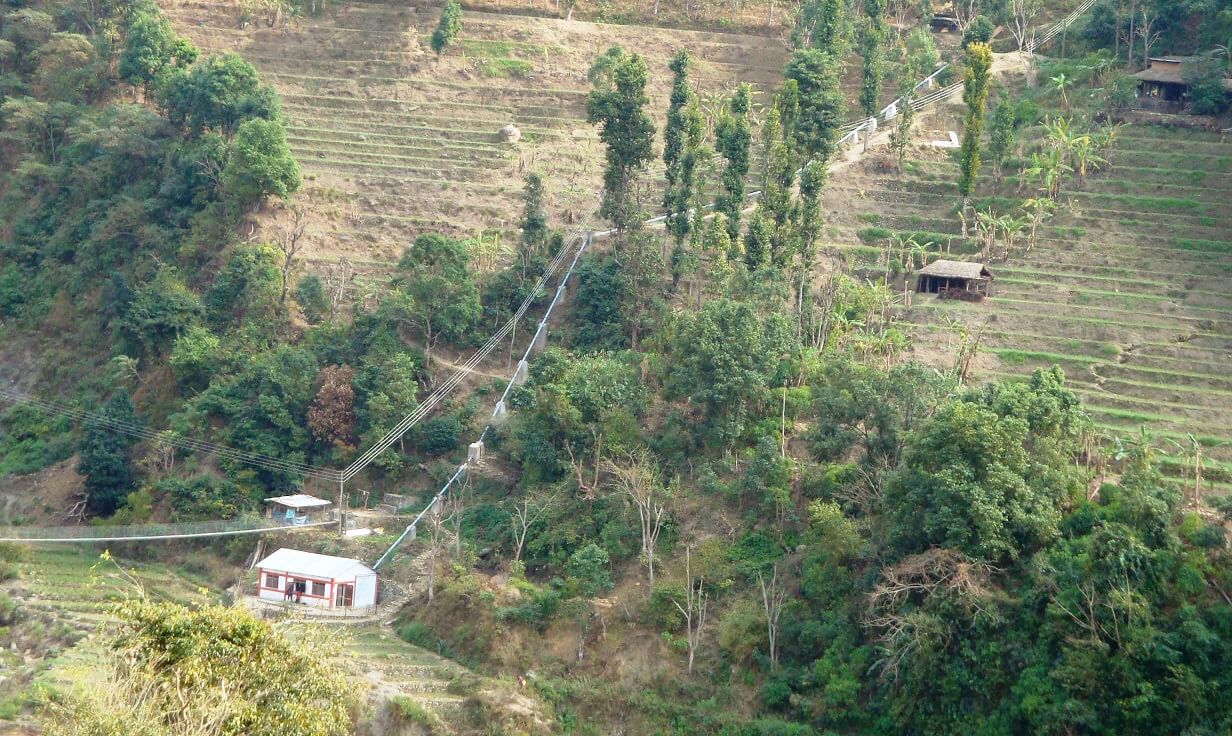
The micro-hydro component has established an excellent model for extending rural electrification across Nepal and for providing tools for poverty alleviation. The programme’s achievements can be grouped into three key areas:
- Establishment of local support structures:
- The programme first established four Micro-hydro Area Centres covering the sixteen hill districts of Nepal which have now broadened their scope to become Regional Renewable Energy Service Centres covering all ESAP Component activities
- The programme supported the establishment of the 20 district level micro-hydro owners’ networks which are governed by a central federation
- ESAP established partnerships with the Nepal Trust, USC-Nepal, the Global Environmental Facility, WWF Nepal, and Tourism for Rural Poverty Alleviation in promoting micro-hydro development.
- Reinforcement of the national framework:
- ESAP has developed a number of reference works detailing standards and  and guidelines for all aspects of micro-hydro projects from operating procedures to social mobilization strategies.  These have become the standards and procedures followed by the majority of micro-hydropower projects in Nepal. There is also a demand for this documentation from overseas organisations working in the hydro-power sector.
- ESAP has helped to establish a vibrant private sector in micro-hydropower with 54 organizations directly involved in survey, design, manufacture and installation. There is also a growing export market for micro-hydro turbines. A series of capacity building activities carried out by the programme has strengthened operational effectiveness in the sector.
- The concept of the “mini-grid” has been effectively established at national level along with the “carpet” identification approach for planning micro-hydro development. Project identification adopting the “carpet” approach has helped to create a demand for rural electrification.
- Supporting new and existing micro-hydro projects:
- Micro hydropower schemes generating the equivilant of 4000 kW of energy have been identified and verified for susbidy approval
- Additional projects equivalent to 2500 kW to bring electrification to 185,000 people in 40,000 rural households are ready for assessment.
- Projects equivalent to 1.8 MW have electrified about 17,000 households.
- ESAP has established functioning support networks of NGOs, CBOs, and private sector organizations at both national and local level.
- The quality of micro-hydro installations has imporved and there are better defined end-use applications.
- The capacity of the sector to handle project implementation has increased threefold – close to 3MW in a year.
- Jobs have been created for 300 engineers in the micro-hydro sector.
- Jobs have been created for 200 engineers in manufacturing and installation companies.
- The living conditions in rural communities have improved due to access to electricity, particularly in the areas of education and health.
- There is better access to technology such as computers and televsion.
|
|
Solar Energy Component – Achievements |
- ESAP has been successful in establishing a national framework for the dissemination of solar energy technology. During phase 1 a total of 69,411 solar home systems (SHS) were installed, bettering the programme target of 40,000. The programme has also established guildlines for adminstering solar energy subsidies and put in place quality assurance and monitoring systems for solar energy projects.
- There are now more than 40 private companies working in the solar PV energy sector thanks to the capactiy building activities of ESAP. In order to ensure the availability of skilled labour, two training programmes were custom-designed for the private sector leading to the qualifications Solar Electric Technician Level 1 and Level 2.  More than 600 level 1 and around 100 level 2 technicians have been trained and certified by the Centre for Technical Education and Vocational Training (CTEVT).
- A study carried out by the Danish Embassy for a battery recovery scheme will be used to inform programme activitiy in ESAP Phase 2.
- After the finalisation of the Nepal Interim Photovoltaic Quality Assurance (NIPQA), ESAP worked to establish a solar energy test station (SETS) to ensure that solar panels, batteries, charge controllers and lamps comply with quality standards. The SETS is now fully functional and plays a pivotal role in the quality assurance of solar PV components.
|
|
Kailali Kanchanpur Rural Electrification Project (KKREP) |
KKREP is working in Western Nepal on grid-extended rural electrification. Different elements of the project are funded and implement by both DANIDA and the Government of Nepal. The elements are interwoven and depend on each other for their effective functioning. The combined total project cost in is 132 million DKK with the Government of Nepal contributing the equivalent of 41.9 million DKK including 10.8 million DKK of subsidy to consumers in rural households. The Project is a pilot in Nepal and is based on the creation of Electricity User Cooperatives (EUCs) which have ownership of low voltage distribution systems.
The programme has initiated massive electrical infrastructure development with over 1 million people (including those in NEA areas) now enjoying rural electrification. The DANIDA funded element of the project uses a collective joining approach which has seen the electrification ratio in the programme area soar to over 98%, a success rate never before seen in Nepal. Even the poorest families of Dalits and Kamaiyas in the programme area now have grid extended electricity in their homes.
In order to put the ownership of low voltage distribution systems within the reach of rural communities, a one time subsidy of NRs 7,200 per household was provided. From this subsidy, NRs 2,600 was released to enable consumers to pay for service connections. The remaining cost for the low voltage systems was covered by an index linked loan, payable over a 20 year period.
216 load-centre based Electricity User’s Cooperatives for LV owners have been established with the Kailali Kanchanpur Rural Electrification Umbrella Organization, (KKREUO) looking after administration and management. The KKREP provides a near perfect RE model, where the profit margin between energy purchase and energy sale is channelled directly back to the community. These earnings, if properly utilized, will play an instrumental role in the overall improvement of socio-economic conditions for the communities involved.
KKREUO Organisational Structure
Before KKREP/DANIDA(1999)- Very limited infrastructure for the distribution of electricity in rural areas
- Only the Mahendranagar, Dhanagadi and Tikapur areas had access to 33/11 kV systems with a total output of 13.5 MVA
- In two districts only about 11,000 consumers had electricity access
- The 33/11 kV systems were overloaded so opportunities for new consumers were limited
After KKREP/DANIDA (2008)- Massive infrastructure development to improve electricity distribution
- Grid extensions at Lalpur, Attaria and Lamki were added, each with a 3 MVA, 33/11 kV system
- New sub-stations were added in Choumala, Joshipur, Jhalari and Sripur, generating a total of  10.5 MVA
- Over 73 km of 33 kV line, 424 km of 11 kV line and 1386 km of LV line have been laid by the programme
- KKREP added over 50,000 consumers making a total of over 112,000 – 10 times more than before the project ;
- Despite the low capacity of the grid (132/33 kV system) there are no reports of system overloading and new extensions should be possible up to 2012.
|
|
Interim Rural Energy Fund (IREF) |
- The IREF subsidy policy and delivery mechanism were established in December 2000, with subsidies being disbursed from April 2001. The IREF is administered by AEPC. By the end of Phase 1, the IREF had grown to more than 75 million DKK as against an original target of 35 million DKK.
- The IREF has instutionalised the effective monitoring of subsidised projects, to ensure efficient and transparent subsidy delivery.  It has also initiated the use of a standard contract document for contractors and developers in the rural energy sector. IREF has signed formal MoUs with two commercial banks in a bid to widen the investment network for rural energy projects.The Mini Grid Support Programme and Solar Energy Support Programme play a vital role in assessing requests for subsidy and making recommendations to the IREF.
- The overall level of subsidy available in accessible areas of the country has been reduced – a requirment of the the Subsidy Policy 2000. Subsidy available to SHS projects however, has been increased due to the provisions in the  Revised Subsidy Policy 2006. Provisions to reduce SHS subsidies have been abolished.
- AEPC carried out several successful capacity building activities for banks financing rural energy projects.
|
The most important lesson to emerge from ESAP Phase 1, regards the sector-wide approach to programming. If this approach is to work there must be both a strong commitment to implement and high degree of flexibility in implementation from all parties involved. Since the success of a ESAP’s market-driven approach depends on the timely delivery of quality-assured services by the private sector, capacity building across the sector must be given priority in ESAP Phase 2.
Important lessons learned during phase 1- A local support structure is crucial for the long-term sustainability of the programme and the prompt and effective delivery of energy services to rural communities.
- Responsibility for promoting and disseminating Improved Cook Stoves must be transferred to local partner organizations to create local ownership of the programme.
- More effort needs to be put into choosing the right promoters for the successful dissemination of ICS, as there is a large demand for ICS technology.
- Coordination at all levels (local government, line agencies, implementing partners, users and promoters) is crucial for the sustainability and market growth of ICS technology.
- Quality monitoring is important for the success of the ICS component. Promoters who build high quality stoves are in huge demand both inside and outside their communities.
- Credit is as equally as important as subsidy.
- End user promotion will only be effective if demand assessment surveys have been carried out and the tools and equipment needed to generate electricity are in place.
- The potential exists for hydropower projects to generate up to 500kW of electricity for much the same cost as for 100kW.
- The involvement of local government in project implementation is important, especially in resolving water rights issues.
- The development and implementation of Quality Assurance mechanisms has been difficult, but they are in place. A long-term commitment to quality control is needed.
- There are problems in ensuring the quality and availability of after-sales service.
- Addressing crosscutting issues such as poverty, gender equality, and the environment has been difficult, as has linking the programme to credit and income generation schemes.
- There has been effective collaboration with the private sector although the programme has faced implementation difficulties due to conflicts of priority and interest. The flexibility offered by the private sector should be offset against the inherent risks.
|
AGREEMENT between the Government of Nepal and the Government of the Kingdom of Denmark for the Energy Sector Assistance Programme (ESAP Phase 2)
AGREEMENT between the Norwegian Ministry of Foreign Affairs and the Government of Nepal regarding development cooperation for ESAP Phase 2
JOINT FINANCING ARRANGEMENT between the Ministry of Foreign Affairs of Denmark and the Ministry of Foreign Affairs of Norway; and the Government of Nepal for ESAP Phase 2
MINUTES OF MEETING held on 19 March 2009 between KfW – a German financial co-operation organization - and the Nepal Solar Home Systems Project authorizing the co-financing of ESAP Phase 2 and committing 8.5 million Euros in financial cooperation funds. |
|
What will ESAP Phase 2 Deliver? |
ESAP 2 aims to provide energy solutions to more than 1 million households in Nepal. Access to clean, cheap and reliable energy in remote rural areas can make an important contribution to improved health, better education and the reduction of poverty. By promoting rural development, the programme will help to support and sustain the ongoing peace process.
- We will provide assistance in developing, adopting and implementing a coherent rural energy policy and continue to strengthen the capacity of the Alternative Energy Promotion Centre.
- We will continue to develop and promote cleaner and more energy efficient biomass energy technologies for cooking and heating in rural areas by ensuring the effective dissemination of the latest biomass energy solutions. We will disseminate ICS technology to more than 500,000 rural households.
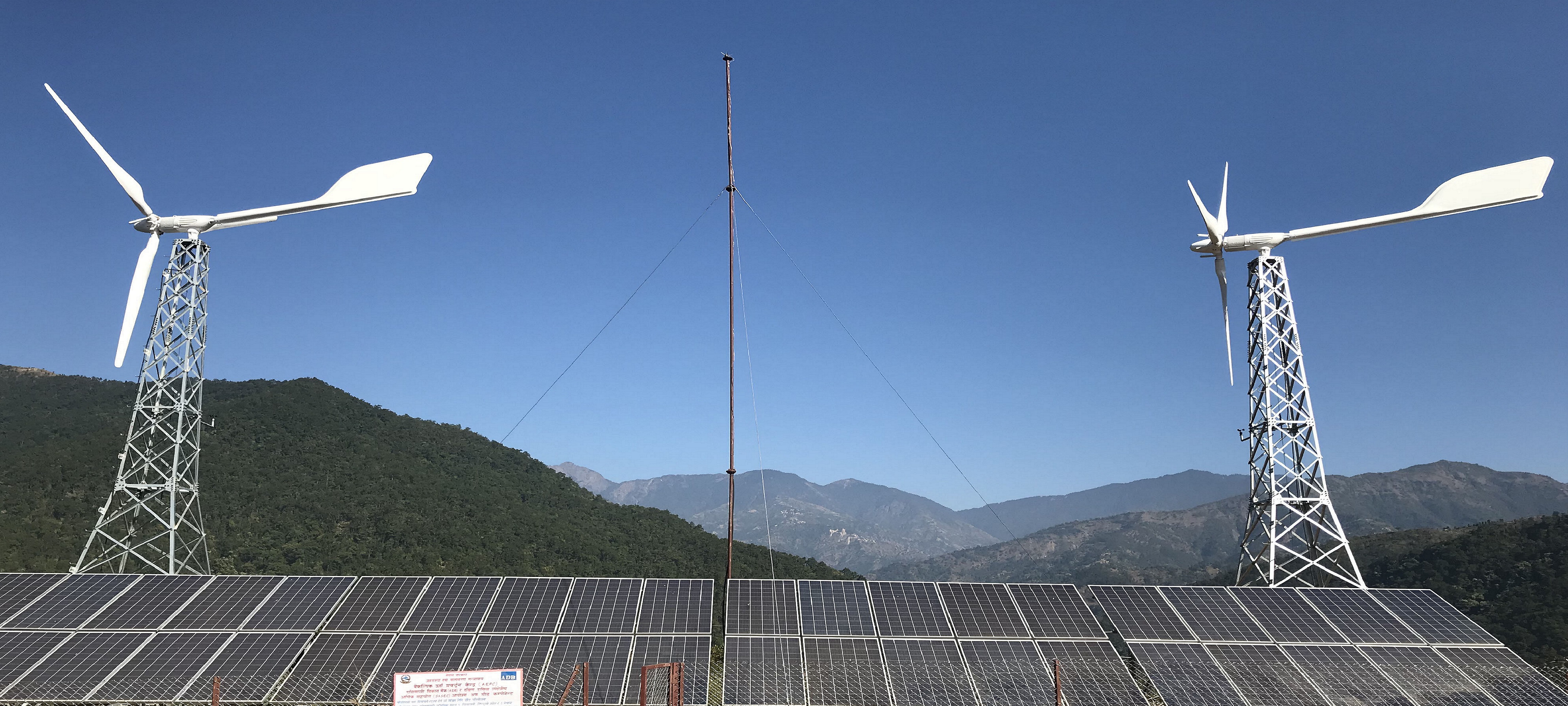
- We will invest in and promote Solar Home Systems of around 36Wp which can power lights and operate small appliances. We will also support new solutions such as small solar powered lamps (Solar Tuki). By the end of ESAP Phase 2, 150,000 households will be served by Solar Home Systems and some 250,000 households by Solar Tuki Systems.
- We will invest in Micro and Mini Hydro Power installations of up to 1 MW in rural areas which are not on the national grid. ESAP Phase 2 aims to generate the equivalent of 5.35MW of electricity to benefit 150,000 rural households across the country.
|
|
ESAP Phase 2 Service Delivery Structure |

Service delivery and monitoring are sourced out to NGOs and the private sector at central, regional and local levels.
Central level monitoring will continue at a very minimum level in the form of random cross-verification checks.
Local level monitoring will be gradually entrusted to local government in partnership with local NGOs and other institutions that will promote cost-effective decentralisation. |
Institutional Strengthening of the Rural Energy Sector (ISRES) This component follows on from ESAP Phase 1 and will promote coordination and cooperation in the sector, so that a set of coherent rural energy policies may be established.  ESAP Phase 2 will prepare the rural energy sector for the adoption of a Sector Wide Approach (SWAp) to rural energy programming. It will also provide direct funding assistance to help improve the transparency and accountability of those operating in the sector.  It will support the strengthening of the government institutions involved in rural energy supply, assist with donor coordination, and continue to build the capacity of AEPC.
Rural Energy Investment / Rural Energy Fund (REI / REF) This component will improve access to affordable renewable energy solutions in rural areas of Nepal. A Rural Energy Fund (REF) created under this component has replaced the financing mechanism created for providing subsidies to poor households in Phase I.  By mobilizing additional resources, the fund hopes to expand its capital. It will work with local financial institutions to promote access to private loan financing for renewable rural energy solutions.
Technical Assistance ESAP Phase 2  will provide technical support to biomass, solar and mini-grid projects which are being financed by either the REF or by end-users. The three programme components are:
Biomass Energy Support Programme (BESP) Solar Energy Support Programme (SSP) Mini-Grid Support Programme (MGSP) |
In order to achieve the objectives of each programme component, ESAP Phase 2 has adopted the following strategy:
- The development of a coherent rural energy policy which adequately addresses the energy needs of the rural population and the rural energy objectives of the government. A cornerstone of the policy will be public / private partnerships (PPP);
- The development of a well funded rural energy subsidy policy with a clear set of objectives and criteria;
- In partnership with local banks and credit institutions, to set up effective credit systems to lead the way from subsidy based to credit based programming;
- The incorporation of rural energy policies into the policies of ministries and institutions working in all areas of rural development;
- Ensuring cross-sectoral and donor coordination on all rural energy programmes and in the provision of rural energy services;
- Information campaigns and educational programmes;
- Supporting the development and sustainability of the rural energy technologies market by building the capacity of end-users, promoters, service providers, institutions and agencies;
- The development of quality standards for the rural energy sector including systems for monitoring the quality of hardware and the quality and reliability off services;
- Carrying out Social Impact Assessments on rural energy programmes and acting on the results.
- Ensuring broad stakeholder involvement throughout the process; from technology development to project identification, design and implementation;
- Institutional strengthening of the rural energy sector
- Ensuring transparency through rigorous monitoring, public performance auditing and effective information dissemination.
|
ESAP Phase 2 will improve the living conditions of the rural population of Nepal by providing access to affordable rural energy solutions that are efficient, environmentally friendly and socially appropriate. We will strengthen and provide technical support to institutions working in rural and renewable energy and disburse rural and renewable energy subsidies.
First Steps
- Ensure regulatory and institutional arrangements are in place
- Source quality-assured income-level appropriate technological solutions
- Make available credit facilities to promote investment
EASP Phase 2 Timeline | November 2006: | Go ahead for Phase 2 given by Government of Nepal | | March 2007: | 5 year agreements (15th March 2007 to 14th March 2012) signed by governments of Nepal, Denmark and Norway | | March 2009: | MOU signed between KFW of Germany and the Government of Nepal for 8.5 million Euros of Solar Energy Subsidy | |
|
|
|
|
|
|